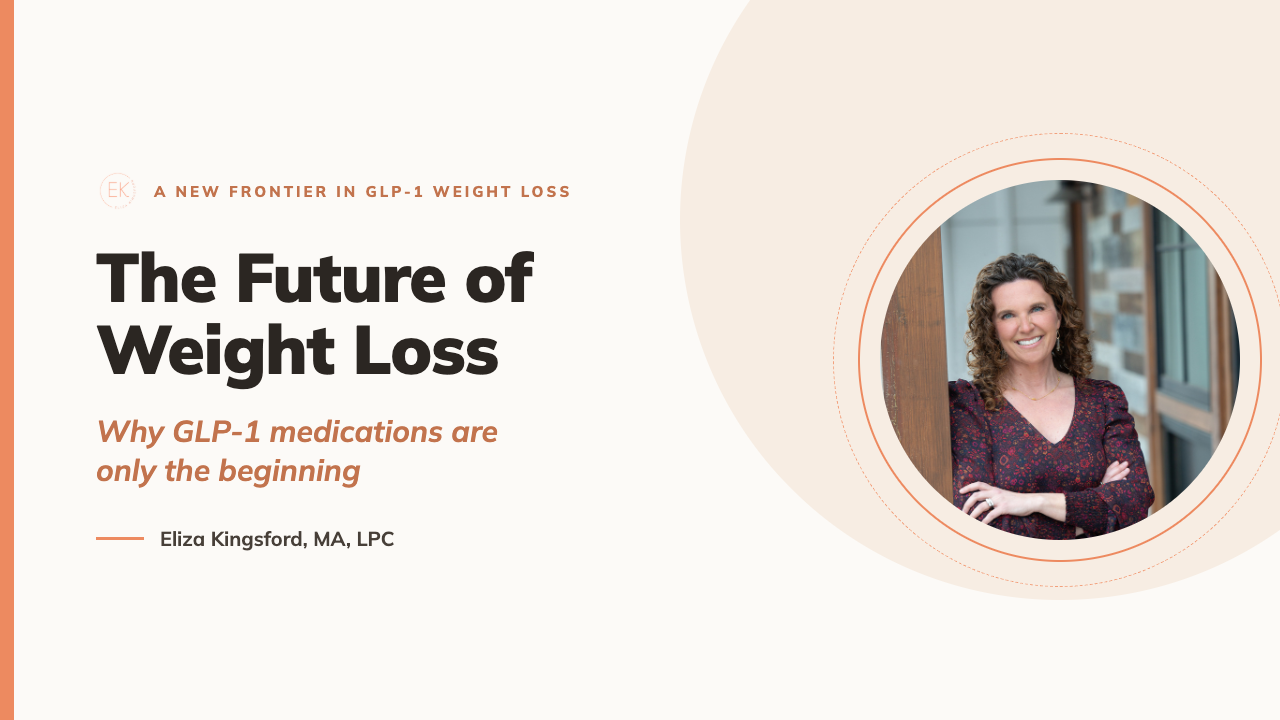
The Future of Weight Loss: Why GLP‑1 Medications Are Only the Beginning
Oct 08, 2026A New Frontier in the GLP‑1 Weight‑Loss Movement
Millions of women are finally finding relief. After twenty years helping women heal their relationship with food, I believe medication is only one piece of lasting transformation. Here's why

Millions of women are finally finding relief through GLP‑1 medications. As a psychotherapist and nervous system expert, I believe that's something to celebrate. But after more than twenty years of helping women heal their relationship with food, I've also come to believe that medication is only one piece of lasting transformation.
Every week, I hear a version of the same question, from a woman several months into Ozempic or Wegovy, from someone just prescribed a GLP‑1 who wants to set herself up for long-term success, or from a physician looking for resources beyond the prescription pad. Eventually, they all ask some version of the same thing:
"What happens when the medication ends?"
Will the weight come back? Will the food noise return? Will I be able to trust myself around food again? For the past several years, we've witnessed one of the most significant advances in obesity medicine in decades. GLP‑1 medications have quieted the relentless mental chatter about food, reduced appetite, and made weight loss feel possible for the first time in years for countless women. I think that's extraordinary. Alongside that hope, I've noticed a quieter, more vulnerable conversation beginning to emerge: what happens beneath the surface?
What twenty years have taught me
For more than two decades, I've worked as a licensed psychotherapist and nervous system expert, helping women navigate emotional eating, chronic dieting, trauma, and the deeply ingrained patterns that make lasting change feel so difficult. Long before GLP‑1 medications entered the picture, I noticed something that challenged nearly everything the weight-loss industry was teaching: the women who experienced lasting transformation weren't the most disciplined, or the ones with the strongest willpower. They were the women who finally learned to feel safe enough to change.
Over thousands of client sessions, it became impossible to ignore, many of the behaviors we label "lack of motivation," "self-sabotage," or "emotional eating" aren't character flaws, they're protective adaptations, ways the nervous system learned to create safety, soothe discomfort, or survive experiences once too much for the body to process. When I began approaching weight through the lens of the nervous system instead of willpower, everything changed. The women I worked with weren't broken; their bodies were doing exactly what they'd learned to do. And once we helped the nervous system feel safe, healthy choices required less force, food lost its emotional power, and self-trust slowly returned. Not because anyone became more disciplined, but because they no longer had to fight themselves every step of the way.
"They were the women who finally learned to feel safe enough to change."
GLP‑1s changed the landscape
When GLP‑1 medications became more widely available, I was fascinated. For the first time, millions of women described something I'd rarely heard: "the food noise is gone." They talked about opening the pantry without feeling pulled toward it, eating until comfortably satisfied, and simply stopping. For women who'd spent decades consumed by thoughts of food, this wasn't just weight loss, it was relief, and it created space: space to think, to breathe, to notice what's happening beneath the habits. In many ways, I saw GLP‑1 medications not as the finish line, but as an opening, a window through which deeper healing could finally begin.
But then the emails started arriving. Women loved what the medication was doing for their appetite, but worried about what came next. Some were surprised to discover that while they weren't physically hungry, they still reached for food during moments of stress, loneliness, or anxiety. Without food occupying so much mental space, uncomfortable emotions suddenly became harder to ignore. It wasn't that the medication had failed. It did exactly what it was designed to do. It just wasn't designed to heal emotional coping patterns, regulate the nervous system, or rebuild self-trust. Medication and emotional healing are two different things, and recognizing that distinction doesn't diminish GLP‑1s, it helps us appreciate them for what they truly are: powerful tools that create an extraordinary opportunity, if we're willing to use it wisely.
Your brain learned these patterns for a reason
One of the most common misconceptions is the belief that if hunger disappears, the struggle with food should disappear too. But hunger and eating aren't always the same thing. We eat because we're physically hungry, but we also eat because we're overwhelmed, lonely, anxious, or grieving, trying to soothe something that has nothing to do with hunger at all. GLP‑1s are remarkably effective at influencing the biological side of that equation. But the emotional patterns that developed over years, sometimes decades, don't disappear just because appetite has changed.
At some point in your life, your nervous system discovered that food could help you survive a difficult moment: comfort when no one else felt safe, predictability in an unpredictable home, the one place you felt pleasure after a stressful day. Your brain wasn't trying to sabotage you; it was trying to help you. Over time those experiences become deeply wired neural pathways, until stress, loneliness, conflict, or exhaustion automatically trigger a reach for food. Not because you're weak, but because your brain became efficient.
"Your brain wasn't trying to sabotage you. It was trying to help you."
This is where something remarkable happens with GLP‑1s: when food noise quiets, the mental bandwidth it once occupied opens up, and the emotions that had been waiting patiently for attention surface. I've had women tell me, "I didn't realize how anxious I was until I stopped thinking about food all day," or "I thought food was the problem. Instead, I realized food had been helping me cope with the problem." Those insights matter, not because they're easy, but because they reveal where the healing actually needs to happen. When a coping strategy disappears before a new one is built, the behavior often simply relocates: to shopping, social media, work, or restlessness, because the nervous system is still looking for regulation. Lasting transformation isn't about removing coping mechanisms. It's about replacing them with healthier, more sustainable ways of creating safety and regulation.
The real opportunity
This is why I get so excited about GLP‑1s, not simply because they help people lose weight, but because they open a window to ask different questions: What am I actually feeling right now? What is my nervous system trying to protect me from? How do I regulate stress without relying on eating? How do I build trust with myself instead of trying to control myself? Lasting freedom doesn't come from fighting your brain. It comes from understanding it.
For years, success in weight loss has been measured almost exclusively by a number on the scale. I think that's far too small a definition. Real success is waking up and realizing food is no longer consuming your thoughts. It's trusting yourself around foods that once felt impossible to manage. It's responding to stress with compassion instead of criticism, and believing your worth has never depended on your weight. When those things change, healthy behaviors often become easier, not because you're forcing them, but because they align with the person you're becoming.
Why I created The Shift: GLP‑1 Edition
As more women began taking GLP‑1 medications, I kept hearing questions that weren't about appetite, they were about identity, safety, and trust: "I'm eating less… so why do I still feel anxious? Why do I still feel like I don't trust myself? Why am I scared to stop taking this medication?" That's when it became clear there was a missing piece in the GLP‑1 conversation. Not another meal plan or workout program. Women needed a different framework.
One of the greatest misconceptions in the weight-loss world is that the goal is simply to lose weight. When I ask women what they really want, I rarely hear "I just want to weigh less." I hear: I want to stop thinking about food all the time. I want to trust myself. I want to stop starting over. I want peace. That's a very different goal, and it requires a very different approach, because beneath the weight, I often find years of self-criticism, perfectionism, chronic stress, and a nervous system that has spent decades trying to survive rather than thrive.
For decades we've been taught that lasting weight loss comes from more discipline, more willpower. I want to challenge that belief. Willpower is a finite resource. The nervous system is not. When it perceives stress, uncertainty, or emotional pain, it naturally looks for ways to restore regulation, and if food has been one of those ways, reaching for it isn't a moral failure, it's a learned survival strategy. Understanding that replaces shame with compassion, and compassion creates the safety required for lasting change.
When I created The Shift: GLP‑1 Edition, I wasn't trying to build another weight-loss program. I was building the support I wished existed: where modern medicine and modern neuroscience work together, and emotional healing isn't treated as separate from physical health. Inside the program, we work on regulating the nervous system, strengthening emotional resilience, rebuilding self-trust, and rewiring habitual coping patterns. Because if the goal is simply weight loss, medication may be enough for some people. But if the goal is freedom, from emotional eating, from shame, from constantly starting over, we have to address the patterns beneath the behavior.
Why more healthcare professionals are paying attention
One of the most encouraging shifts I've seen isn't happening only among women taking GLP‑1s, it's happening within the medical community itself. As physicians and nurse practitioners prescribe these medications at unprecedented rates, many are recognizing that the prescription is only one part of the journey. Office visits are brief, follow-up is limited, and there often isn't enough time or the right framework to help patients navigate the emotional and psychological side of long-term change: How does someone rebuild trust with food after decades of chronic dieting? How do they prepare for tapering off medication without fearing they'll lose everything they've worked for?
These aren't medical questions alone, they're human questions about behavior, identity, and the nervous system. I believe we're beginning to see a meaningful evolution in obesity care: not choosing between medication and psychology, but recognizing that each plays a vital role. Medication creates the opportunity for change. Comprehensive support helps that change become sustainable.
"Medication creates the opportunity for change. Comprehensive support helps that change become sustainable."
A new model of care
For too long, we've treated obesity as though it's only physical, or only psychological, or only behavioral. The truth is, it's all of those things: our biology, psychology, environment, nervous system, and history all matter. The future of weight loss isn't about choosing between medication and mindset, or the body and the brain. It's integration: bringing together the best of medicine, neuroscience, psychology, and nervous-system regulation into one comprehensive model of care, so women get what they've been searching for all along, not another diet, but a genuine opportunity to heal.
For decades, the conversation around weight loss has centered on one question: how do we help people lose weight? I believe we're finally ready to ask a better one: how do we help people create a life where they no longer need to fight themselves every single day? Very few of the thousands of women I've worked with came to me because they simply wanted to weigh less. They came because they were exhausted, searching not for another way to lose weight, but for peace with food, with their bodies, with themselves. That's a very different destination, and it requires a very different map.
The work I'm most passionate about
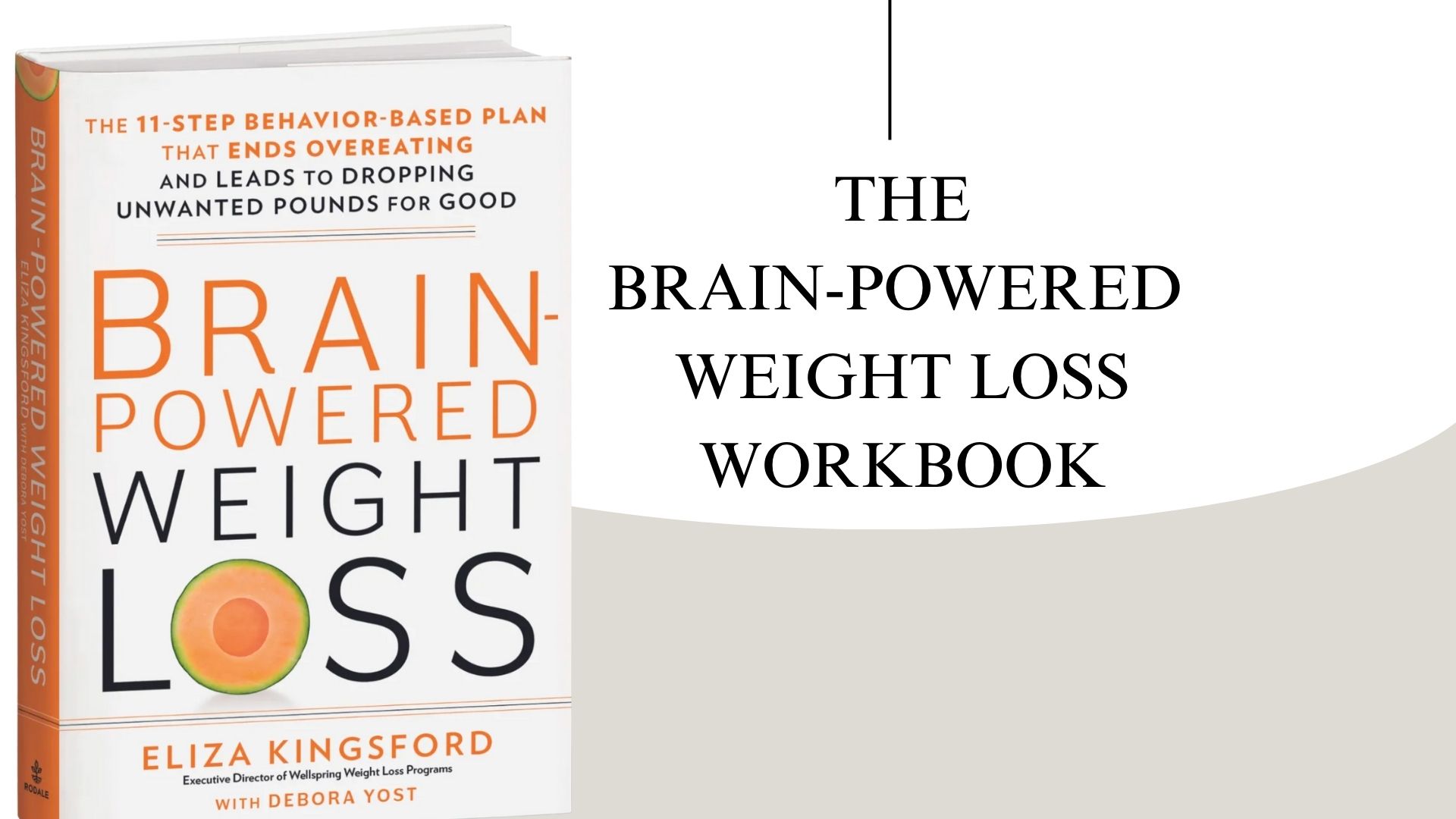
Everything I've created, from my books to my programs to my clinical work, has been guided by one belief: people don't need more shame, they don't need more rules, they need a framework that makes sense of their experience. When women understand how the nervous system influences eating, self-sabotage, and emotional regulation, they stop seeing themselves as broken and begin seeing themselves as adaptable, capable, resilient. For many, that shift is more life-changing than the weight loss itself.
"The greatest transformation isn't fitting into a smaller pair of jeans. It's waking up one day and realizing you're no longer at war with yourself."
I don't believe the future of obesity care belongs exclusively to medicine, psychology, or nutrition. I believe it belongs to integration: to providers who recognize that biology, behavior, emotion, and the nervous system are deeply interconnected, and to programs that support the whole person, not just the symptom. That's the future I want to help build, and it's exactly why I created The Shift: GLP‑1 Edition, not because women need another weight-loss program, but because they deserve support that matches the complexity, and the brilliance, of the human body and mind.
Take Your Next Step
The integrated framework I built for lasting transformation on and off medication. Learn more at elizakingsford.com.
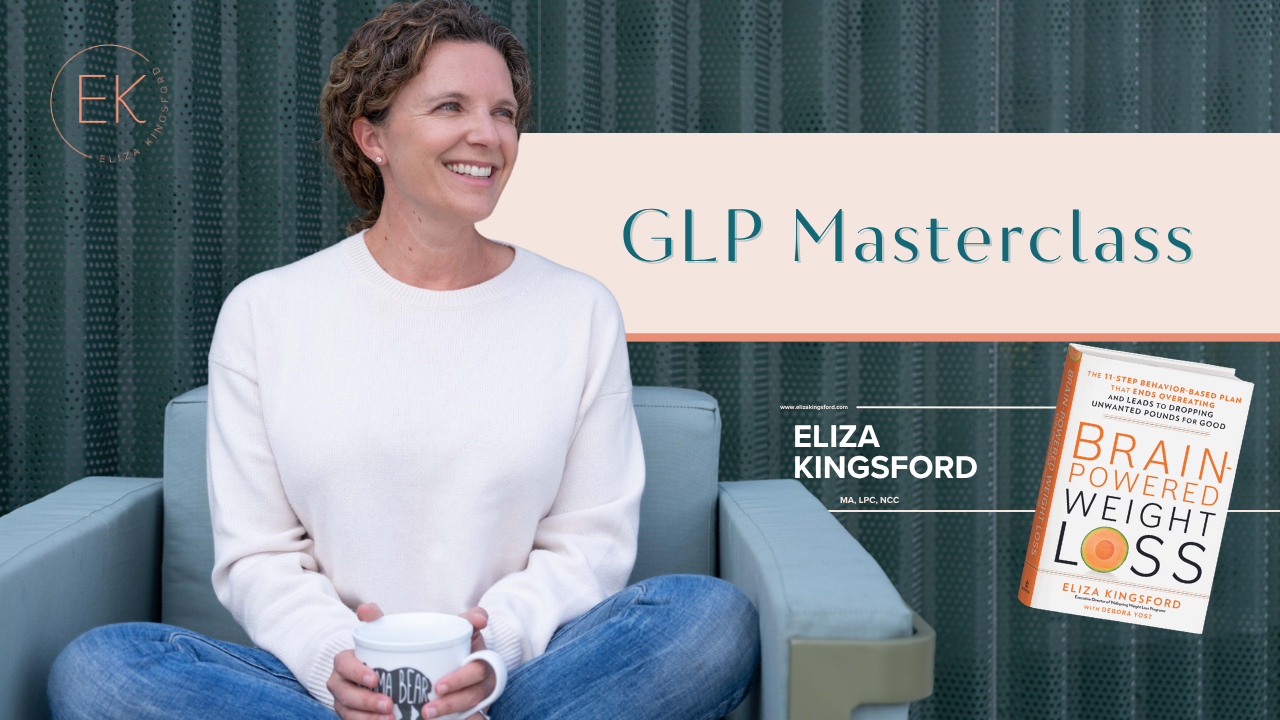
Five Masterclass sessions, hosted LIVE with me, Eliza Kingsford. Understand why food, stress and body image can still feel hard while your GLP is working, and learn the practical skills you can begin using now!
Email me directly at [email protected].
One Final Thought
GLP‑1 medications may quiet the noise around food. But lasting freedom comes from healing the patterns that created the noise in the first place.
That's the work that changes lives. And I believe it's where the future of weight loss is headed.
Eliza Kingsford, MA, LPC
Psychotherapist & Nervous System Expert · elizakingsford.com
This article is for educational purposes and is not medical advice. Always consult a qualified healthcare provider before starting or stopping any medication.